
raydenwaller
COMPANY PROFILE

raydenwaller
Overview
Coloring pages and listening: Make room for both activities
A picture and a recording can both appeal to you without working well together. Perhaps you want to keep coloring a flower while familiar music plays. Or you want to follow a new account closely and find that each small shape takes your attention away from a sentence. If you are browsing free coloring pages pdf format options for that kind of session, start with what you want from each activity. Choosing a page for listening means considering the drawing, the audio, and an easy way to pause either when the combination stops being enjoyable.
1. Decide what you want to notice in each activity
Ask what you would miss if your attention moved elsewhere. A recording you know well makes different demands from unfamiliar instructions. Likewise, filling an open petal differs from following a dense arrangement of connected shapes.
1.1 Choose which activity needs the closer attention
If you mainly want to enjoy working on a picture, familiar music may provide the background you want. You do not need to catch every note to continue. If you want to follow a spoken explanation, however, a missed sentence might leave the next part unclear. Give that listening experience priority and set down the coloring tool when you want to attend closely. The useful question is which experience matters more now, rather than whether combining the two is supposed to improve focus.
- Notice whether missing a few seconds of audio would make the next part hard to follow.
- Check whether the drawing asks for frequent choices about boundaries, details, or the next area.
- Decide which activity you are willing to pause first if your attention becomes divided.
1.2 Recognize when combining would defeat the purpose
Imagine wanting to notice every small feature of a garden drawing while also following every step of an unfamiliar account. Simplifying both could remove the qualities that attracted you. In that case, separate them. Listen first, then return to the picture, or choose the reverse order. This preserves both experiences without creating a rule that you must always do one thing at a time.
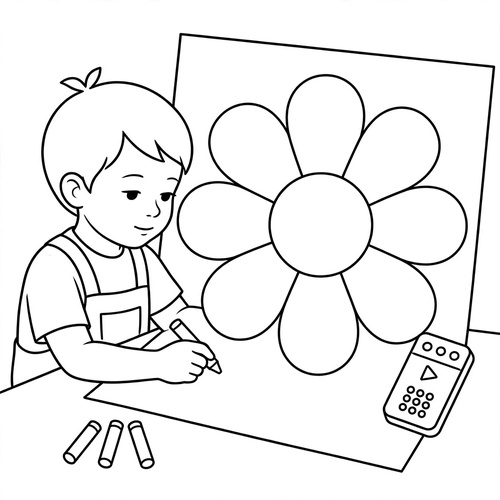
Child coloring a large flower while listening to audio
2. Match the drawing to the listening you chose
Look at the visual work you actually want to do while the audio plays. A familiar sheet can be useful because you already know its layout. A new drawing is not automatically a better match.
2.1 Inspect demands that repeatedly pull your eyes
Compare two hypothetical pictures: a plant with separate broad leaves and a scene filled with small connected shapes. On the plant, you may recognize the next leaf at a glance. In the scene, you may need to inspect several boundaries before choosing where to continue. Those differences matter only in relation to what you want to hear. The detailed scene could still suit background music when your main interest is the picture. Conversely, broad leaves are no help if you do not want to color them. When considering coloring pages to print, inspect a representative region, then ask whether its visual decisions fit the attention you intend to keep on the sheet.
2.2 Keep a page you can pause without losing your place
A continued sheet may have one untouched flower you can easily find again. You can stop for an interesting passage and return to that flower without reconstructing a plan. A new linked pattern may take more looking to locate your next area. You can still choose it, but acknowledge that extra reentry step. Before starting the audio, notice where you expect to resume.
- Use a large uncolored petal beside a finished section as a visual landmark.
- Notice a broad leaf, wing, or other clear shape that is easy to find again.
- Leave the page where you stopped instead of creating a new sequence you have to remember.
One evening, a listener begins coloring a detailed garden while following a new interview. After replaying the same sentence twice, they put the pencil down and finish the passage first. Later, one large uncolored flower makes the return easy. Nothing was wrong with either activity; they simply worked better in sequence for that moment.
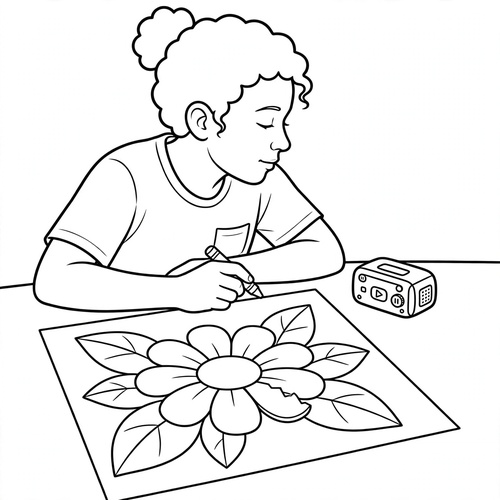
Pausing to listen with one flower petal left unfinished
3. Prepare a setup you can control
Arrange the things already available so an ordinary pause is practical. You need access to the picture and a workable listening arrangement, rather than an ideal room or a new set of equipment. If you prepare coloring pages for printing before the session, keep the chosen sheet easy to reach and ready to pause without disturbing the audio setup.
3.1 Keep playback and the sheet within easy reach
Place the sheet so the current coloring region remains visible. If your playback device offers a pause control, keep it reachable without laying the device across the drawing. Moving the device to the side may be enough. Pause playback before rearranging things if you want to avoid missing part of the recording. Use the controls your actual device provides; this activity does not depend on a named app or special equipment.
3.2 Agree on shared sound before starting
If other people use the space, check whether shared sound is welcome. Someone may want quiet even when your recording suits you. An arrangement everyone accepts can resolve that difference. Otherwise, coloring without audio remains a complete option. Agreeing before playback also avoids repeatedly stopping the picture to negotiate the sound.
You Might Also Enjoy:
Coloring Pages For Free With Fun Themes For Every Calm Moment
Begin A Bright Class Day With Free Coloring Printable Pages
4. Check which activity is actually getting attention
Once you begin, notice what you keep returning to. Replaying a wanted passage or repeatedly losing interest in the picture tells you something concrete about this pairing. Use that information to make a small adjustment or separate the activities.
4.1 Pause one thing when you want to follow the other
Suppose you repeatedly replay a passage because choosing and filling small shapes keeps drawing your attention away. Set the coloring tool down and hear the passage without continuing the picture. If you then want to keep listening closely, leave the sheet paused at a recognizable area. Alternatively, keep the picture as the main activity and choose listening material that asks less of you, provided that material still appeals. There is no requirement to train yourself to make this combination work. A pause is useful when it lets you enjoy the part you were otherwise missing.
4.2 Separate the activities when a smaller adjustment fails
The opposite can happen: you follow the recording but no longer notice or want to work on the picture. Continue listening and put the sheet aside, or pause the audio and return to a region you actually want to color. If shifting the device or choosing a familiar area does not restore a wanted combination, separate the activities. You have not failed because the sheet remains unfinished or the session was short. A useful outcome is recognizing which activity you want to continue now, with a clear way back to the other later.
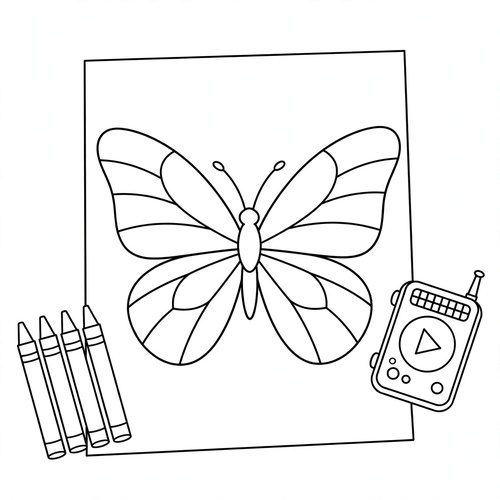
Butterfly coloring sheet with crayons and audio player
5. Find coloring pages for the activity you have chosen at ColoringPagesCreative
ColoringPagesCreative offers homepage collections and discovery sections as starting points for exploring coloring pages. Browse with a concrete visual need in mind, such as separate regions you can recognize after a pause. Open an individual resource to inspect its actual drawing, then check the offered format, any paper guidance, and the terms relevant to your intended use. An existing sheet may already fit, so browsing is optional. A resource's availability does not establish that a particular design will improve listening or make the two activities appealing together.
5.1 Use the observed homepage routes as starting points
Carry your question into the collection you explore: can you locate a wanted region easily, or do connected details demand repeated inspection? Judge the actual candidate. Do not assume an audio-friendly category exists or that an open design will suit you better than your current sheet.
5.2 Confirm the individual resource and intended use
Confirm the chosen drawing and its supported use route before preparing it. Follow any stated paper guidance and relevant terms. Then make the activity decision yourself: keep the picture and recording together while both appeal, and pause or separate them when you want to attend to one. The aim is not to force two pleasant activities together, but to leave room for each when that is what makes the session enjoyable.
Actions
Primary Address
136 Spring St Soho, New York, New York, New York, United States 10007
Social Media
| Services: Arts & Entertainment | |
|
Founded:
Revenue:
Firm Size:
No of Clients:
|
|
| Client Name: | |
|
Key People:
|