
5 Best At-Home Product Testing Platforms for Modern Brands
5 Best At-Home Product Testing Platforms for Modern Brands
Posted on: September 9, 2026 | Written by: Maria Hart

Brands spend months developing a product, then find out what consumers actually think only after launch. At-home product testing platforms exist to fix exactly that gap, but picking the wrong one creates its own problems. Keeping testers engaged outside controlled environments is genuinely hard. So is building a panel that reflects your real target market, or protecting pre-launch confidentiality when products ship to strangers' homes. After reviewing dozens of platforms across the CPG, food and beverage, and personal care space, this guide covers the five options worth serious consideration.
The vetting process for this list
Each platform on this list was assessed using publicly available information gathered from official websites, user reviews, published case studies, and industry directory profiles. Only platforms with a documented track record in consumer product research made the final cut.
→ See the full research breakdown
- Peekage - Best for product testing and consumer insights research
- Quantilope - Best for enterprise consumer insights and automated quantitative market research
- Circana - Best for enterprise consumer packaged goods research and retail intelligence
- Dig Insights - Best for enterprise consumer insights research
- Qualtrics - Best for enterprise experience management and market research
The Difference the Right At-Home Product Testing Platforms Make
Picking the right at-home product testing platform isn't a minor procurement decision. It shapes whether you get feedback that actually moves a product forward, or a dataset that raises more questions than it answers.
The main challenge most brand teams face is twofold. Building a tester panel that reflects your actual consumer base takes real infrastructure, and keeping those testers engaged enough to submit complete, usable feedback takes just as much effort.
Platforms with strong demographic controls and built-in compliance tools consistently outperform general alternatives here. They're not just sending products to households. They're managing the entire research loop.
The downstream difference shows up in tester completion rates, in how accurately a panel mirrors your target demographic, and in how quickly you move from product dispatch to a final insights report. Those three factors alone separate research that drives decisions from research that collects dust.
The 5 Best At-Home Product Testing Platforms: Quick Comparison
Note: All data in this table is sourced from review platforms and the official websites of the listed companies.
Company Name: Peekage
Years Operating: Est. 2019
Team Size: 18
Headquartered In: Toronto, Canada
Company Name: Quantilope
Years Operating: Est. 2014
Team Size: 198
Headquartered In: Hamburg and New York
Company Name: Circana
Years Operating: Est. 1979
Team Size: 6,194
Headquartered In: Chicago, Illinois
Company Name: Dig Insights
Years Operating: Est. 2010
Team Size: 306
Headquartered In: Toronto, Ontario, Canada
Company Name: Qualtrics
Years Operating: Est. 2002
Team Size: 6,018
Headquartered In: Provo, UT
Peekage - Best for Product Testing and Consumer Insights Research
What Is the Purpose of Peekage?
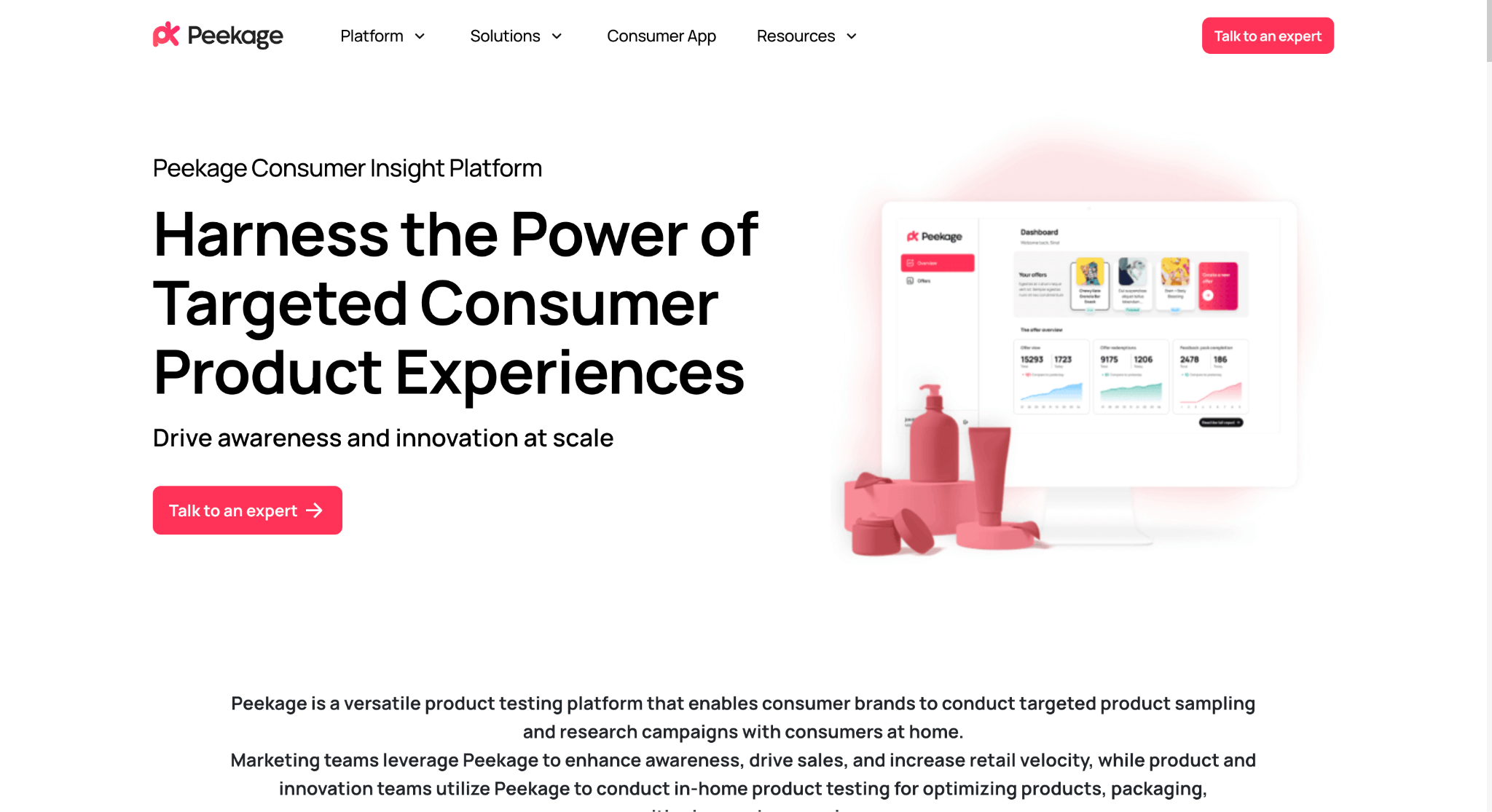
Peekage is an all-in-one platform built for consumer brands that want to run targeted product sampling and in-home testing campaigns without needing an internal research team to manage it all. Their platform covers three main areas: digital product sampling, in-home product testing, and consumer insights research. With a community of over 5 million shoppers segmented across 200+ behavioral and demographic attributes, they give marketing, product, and strategy teams the targeting depth that typically takes months to build from scratch.
What's Peekage's Edge in At-Home Product Testing Platforms?
The real problem Peekage solves is the gap between sending products out and getting research-quality feedback back, through their study builder that removes the need for in-house data scientists. Based on documented client results, that approach has delivered outcomes like KIND's 6x return on product launches and Wise Snack's 70% cost savings in product development, which is the kind of tester engagement and completion rate that's genuinely hard to match at this price point (not enterprise-priced, which makes it accessible to mid-market brands too).
From the User Reviews:
Clients consistently mention the targeting quality as a standout, particularly the ability to reach specific consumer segments without extensive setup. The feedback turnaround speed gets flagged often as a practical win for teams working against tight launch timelines. The combination of scale and precision at a non-enterprise price point seems to be what keeps brands coming back.
Quantilope - Best for Enterprise Consumer Insights and Automated Quantitative Market Research
What Is the Purpose of Quantilope?
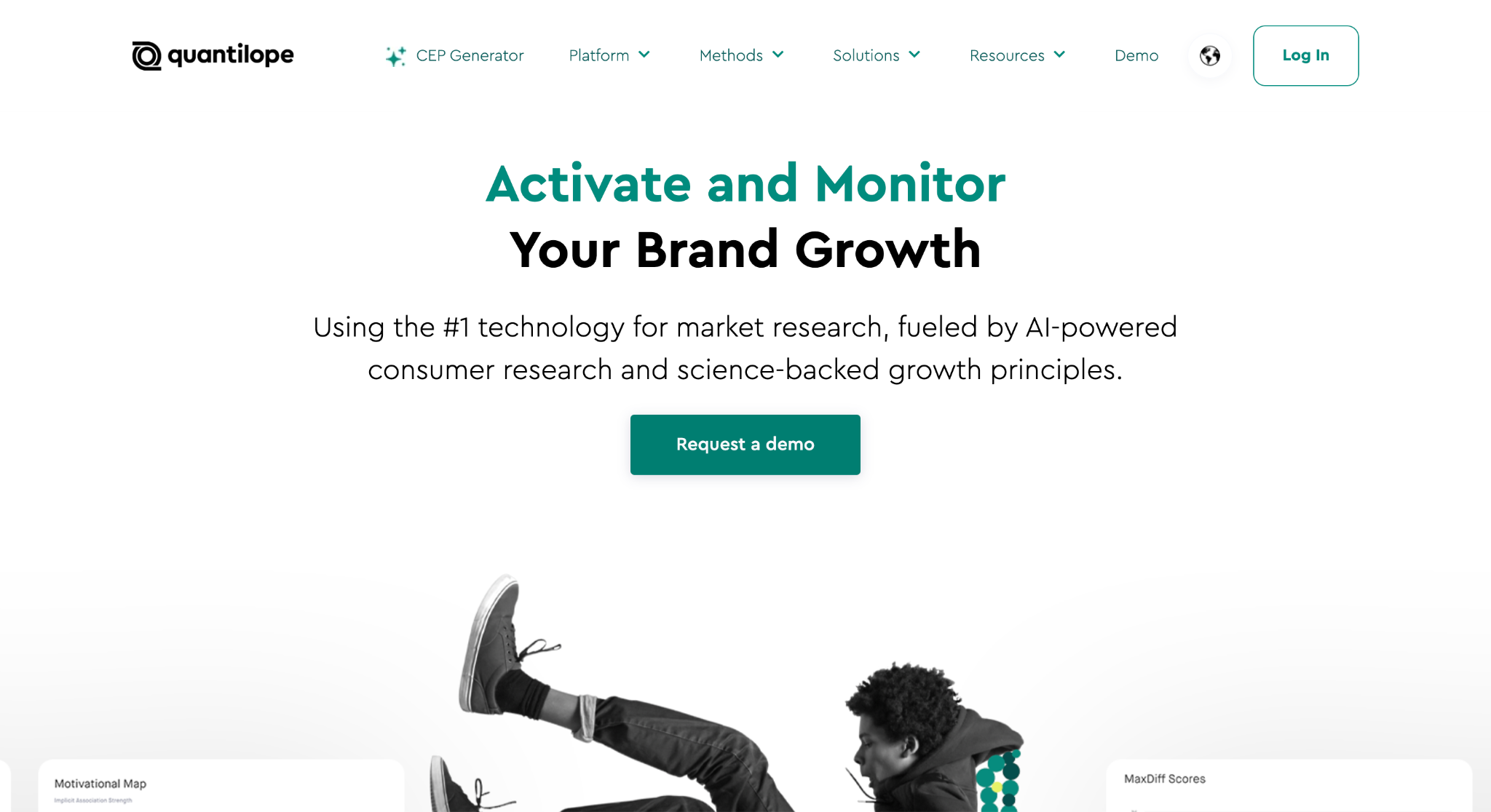
Quantilope is an insights automation platform built around AI-driven quantitative and qualitative research. They offer 16 automated advanced research methods, including MaxDiff, TURF, Implicit Testing, and A/B Tests, all accessible without needing a research scientist to configure them manually. Their panel network reaches 300 million consumers worldwide, and clients like Nestle, Pepsi, and Danone use the platform regularly. The AI co-pilot, called Quinn, sits inside the platform to guide researchers through study design and interpretation.
What's Quantilope's Edge in At-Home Product Testing Platforms?
Speed is where Quantilope separates itself, with under one second to access insights after survey responses come in, which removes the lag that typically slows post-test decision-making. Their clients reporting 80% cost reductions and real time savings reflects a platform that's actually built around speed rather than just claiming it.
From the User Reviews:
Reviewers frequently point to the platform's ease of use for running sophisticated methods without needing a quant specialist on staff. The ability to move from study setup to live data quickly gets mentioned repeatedly. For teams that need enterprise-grade methodology without enterprise-grade research headcount, this platform earns its reputation (think mid-to-large brand teams with real volume to push through).
Circana - Best for Enterprise Consumer Packaged Goods Research and Retail Intelligence
What Is the Purpose of Circana?
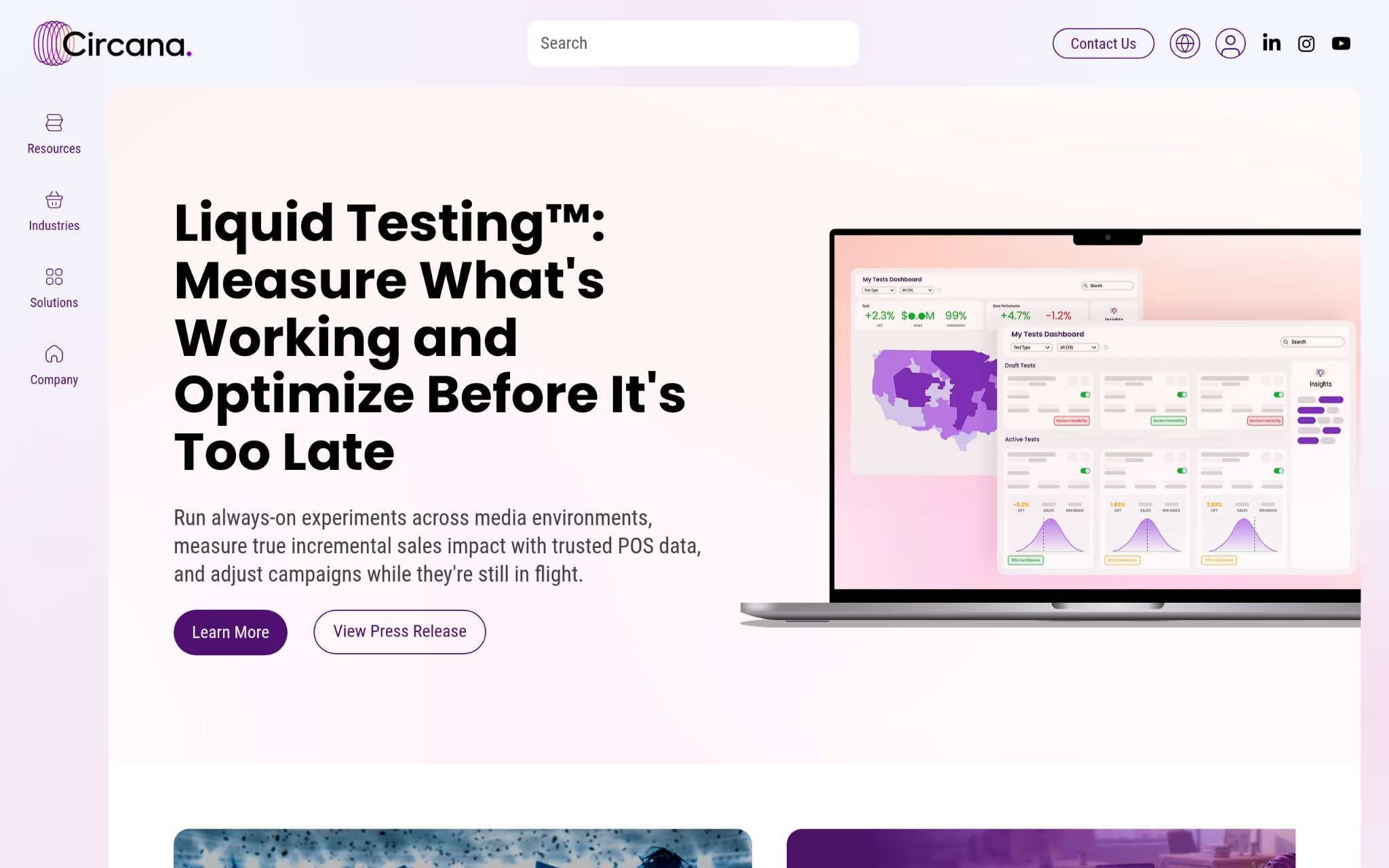
Circana came from the merger of IRI and The NPD Group, combining decades of retail measurement and consumer analytics into one organization. They track millions of products across 2,000 categories in 500,000 stores across 20 countries, covering $5.8 trillion in global consumer spend. Their Liquid Data platform ties together predictive analytics and consumer behavior insights across 25 industries, making them one of the few research providers with both the depth and the breadth to advise nearly 7,000 brands and retailers at once.
What's Circana's Edge in At-Home Product Testing Platforms?
Where most research platforms give you consumer opinions, Circana layers actual purchase behavior from retail environments on top of that feedback, which changes the quality of the insight entirely. That retail intelligence angle is rare in this space, and it's why outlets like Bloomberg, CNBC, and The New York Times pull from their data when covering CPG trends.
From the User Reviews:
Clients who work with Circana tend to be serious enterprise buyers, and the reviews reflect that. Feedback centers on the data breadth and the reliability of their retail tracking across categories. The Forrester and Gartner recognition they've received lines up closely with how enterprise clients actually describe the experience.
Dig Insights - Best for Enterprise Consumer Insights Research
What Is the Purpose of Dig Insights?
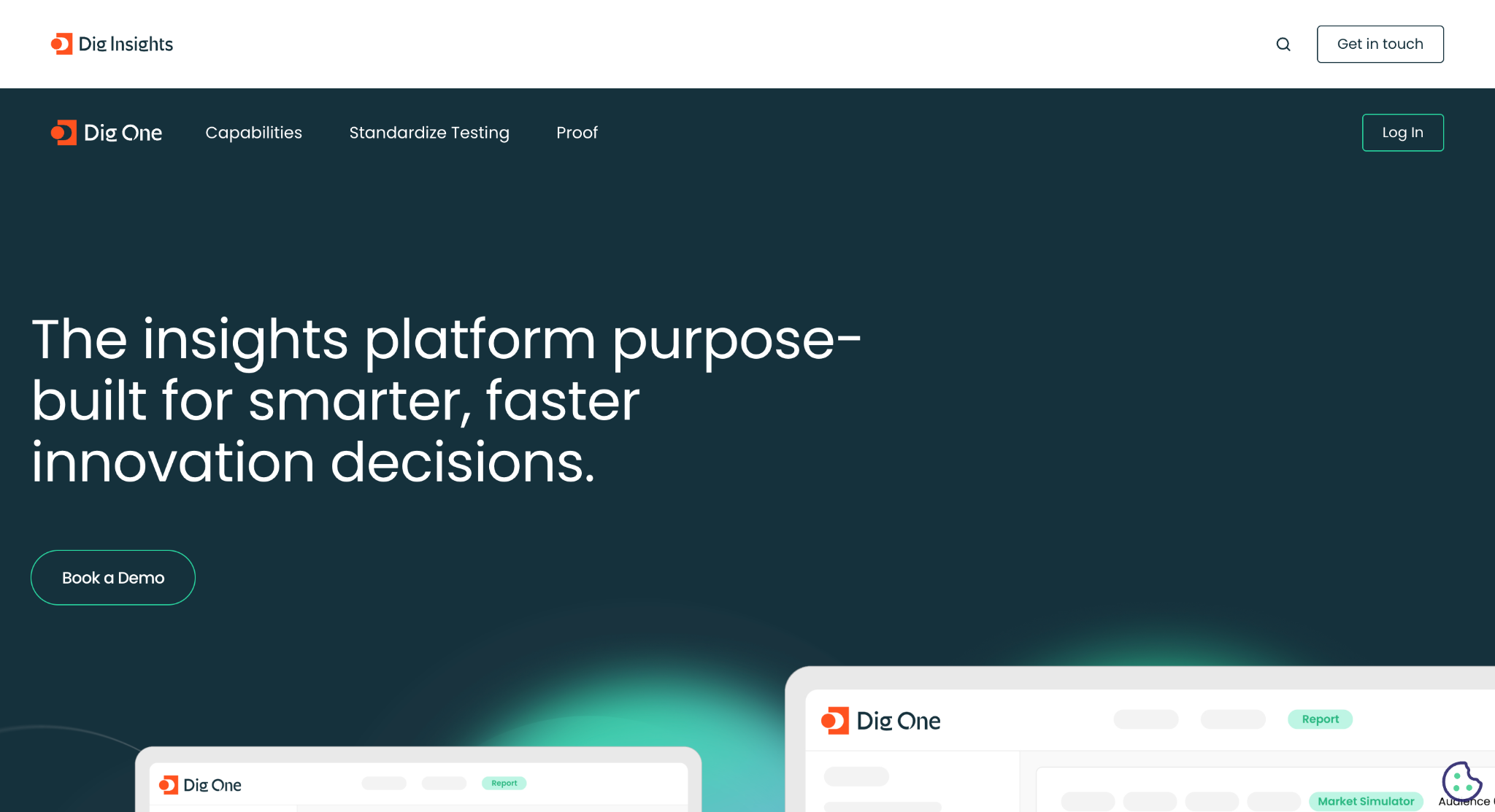
Dig Insights is a technology-backed insights firm focused on helping brands succeed with product testing through predictive analytics and a strong read on consumer behavior. Their platform, Dig One, integrates two proprietary tools: OneCliq, a cultural context engine pulling from social data, and Upsiide, a testing platform built for fast concept evaluation. They operate across 70 markets covering Food and Beverage, Quick Service Restaurants, Personal Care, and Financial Services, with a client list that includes Pizza Hut, McDonald's, and Pernod Ricard.
What's Dig Insights's Edge in At-Home Product Testing Platforms?
The combination of social data, survey data, and testing under one platform gives Dig Insights a multi-layered view of consumer response that single-method platforms struggle to replicate. For brands testing across multiple geographies, their global standardization with local customization capability means research quality doesn't drop when you move from one market to the next.
From the User Reviews:
Reviews from enterprise clients point to the quality of the analytical output, particularly the ability to connect cultural signals to research findings in a way that feels grounded rather than theoretical. The team's depth across research, data science, and strategy gets mentioned as a reason clients stay long-term. That kind of cross-functional knowledge is rare.
Qualtrics - Best for Enterprise Experience Management and Market Research
What Is the Purpose of Qualtrics?
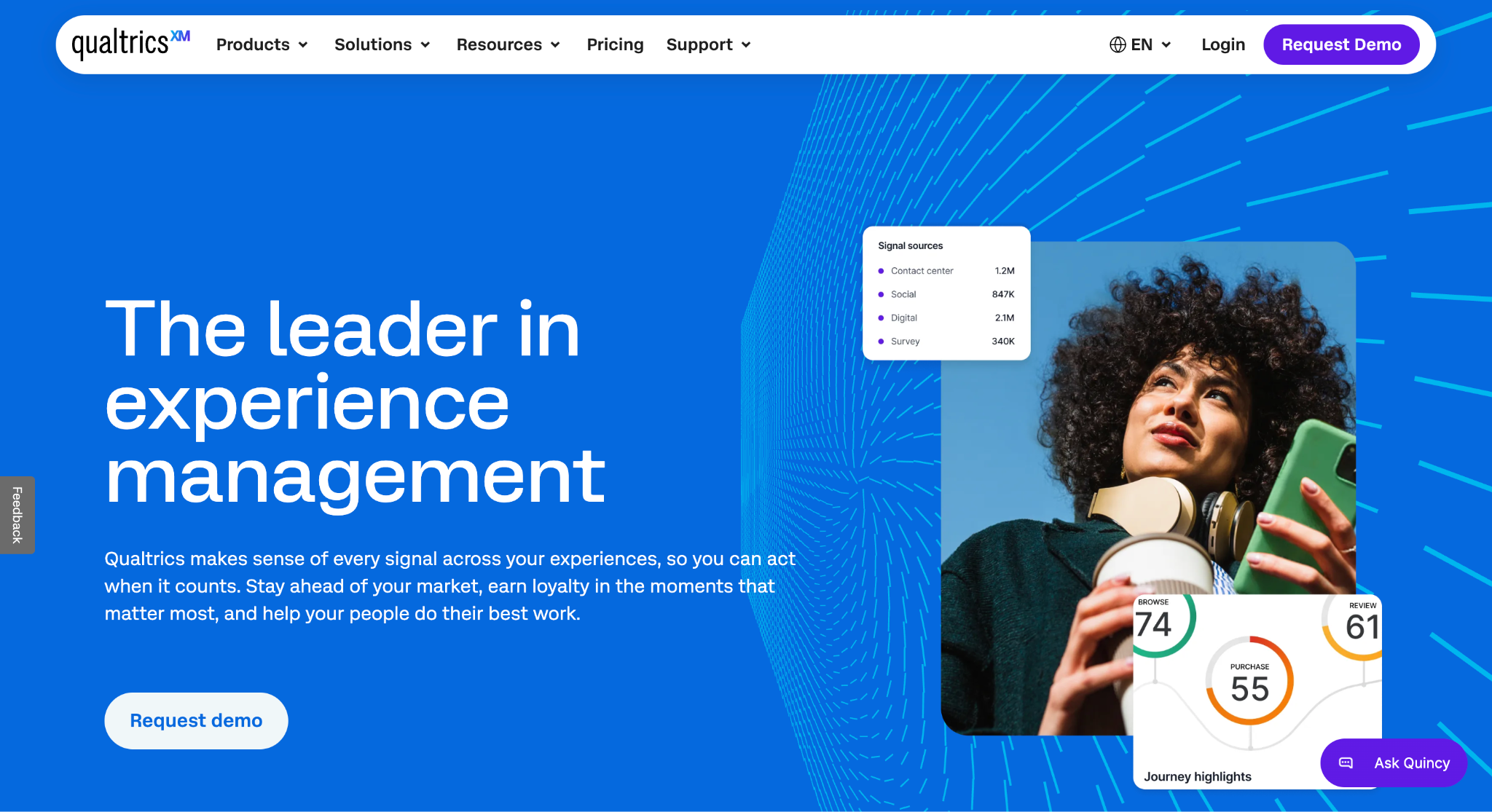
Qualtrics is an experience management platform that helps organizations collect and act on feedback across the entire consumer journey. Their platform pulls signals from surveys, calls, digital interactions, and service touchpoints, then ties them together through automated workflows powered by what they call Experience Agents. They also offer research-grade synthetic audiences built on large language models, which lets teams validate hypotheses quickly before running full studies. Clients include Shake Shack, Samsara, and ServiceNow, with reported outcomes like 50% reductions in research costs.
What's Qualtrics's Edge in At-Home Product Testing Platforms?
The synthetic audience capability is genuinely useful for teams that need fast directional answers before committing budget to a full in-home test, cutting early-stage research time without sacrificing too much signal quality. Pairing that with their omnichannel feedback collection creates a research stack that covers the full arc from initial concept to post-launch performance.
From the User Reviews:
Reviewers tend to praise the breadth of the platform, particularly the ability to run multiple research types without switching tools. The automated text analytics and workflow tools get strong marks from teams that need research to feed directly into operations. For enterprise teams that want everything connected (surveys, product feedback, service data), this platform covers more ground than most alternatives in this list.
The Process Behind This Ranking
The First Step: Assembling Raw Data
The longlist for this ranking was built by pulling platform names from multiple sources at once. Industry directories, software review sites, and published case studies from the CPG and consumer research space all fed into the initial pool. No single source determined inclusion at this stage. The goal was breadth first, so that the shortlisting phase had enough material to work with across different platform types, company sizes, and service models.
Pre-Verification Phase
Once the longlist was assembled, platforms without a documented presence in consumer product research were removed. Review patterns were analyzed across multiple sites to identify consistency of sentiment. Platforms where the feedback was thin, heavily skewed in one direction without supporting evidence, or where the review volume was too low to draw conclusions, were filtered out at this stage. Only options with enough public track record to assess meaningfully moved forward.
The Verification Phase
Claims made on each platform's official website were cross-checked against what users and clients reported through reviews and published case studies. Where a platform claimed specific outcomes, those claims were checked for corroboration in independent sources. Platforms where the gap between stated capabilities and real-world reports was wide got flagged and reconsidered. Real results from actual brand clients carried more weight than feature lists or marketing language.
Tracking Authority Markers
Recognition from credible third-party sources was factored into the evaluation. This included awards from industry research bodies, mentions in mainstream business media, and appearances in analyst reports from organizations like Forrester and Gartner. These signals don't replace performance data, but they do confirm that a platform has earned attention from people outside its own marketing department. Consistency of recognition over time carried more weight than a single one-time mention.
At-Home Product Testing Platforms Proof Points
Each platform was assessed for evidence specific to at-home and in-home product testing work. Dedicated service pages covering in-home testing methodology, verified client reviews from CPG and consumer goods brands, and case studies showing measurable outcomes from product research campaigns were all treated as positive proof points. Platforms with generic research positioning and no clear evidence of in-home testing experience were ranked lower regardless of their broader capabilities. Topic-specific depth mattered more than overall platform size.
How to Pick Your Best Match
The right platform depends on what your research program actually needs right now, not what sounds most impressive in a vendor demo. Ask yourself whether you need speed, depth, targeting precision, or all three before comparing options.
- Industry/Domain Experience: Look for platforms with documented work in your product category. A platform that's run food and beverage in-home tests repeatedly will understand tester compliance and cold-chain logistics in ways a general research tool won't.
- Features and Capabilities: Check whether the platform handles recruitment, shipping, feedback collection, and reporting in one place, or whether you'll be stitching tools together yourself.
- Pricing Structure: Platforms vary from self-serve models accessible to mid-market brands to full-service enterprise contracts. Know your budget ceiling before entering conversations.
- Results Measurement: Ask how tester completion rates, NPS lift, and purchase intent are tracked and reported. Vague reporting structures produce vague decisions.
- Industry Knowledge and Compliance: Confirm the platform understands pre-launch confidentiality requirements and can manage NDA adherence across a distributed tester panel.
Closing Thoughts
The at-home product testing space has more options than it did five years ago, but not all of them are built for the same job. Peekage works well for brands that want targeted in-home research without building an internal team around it. Quantilope and Qualtrics suit teams with high research volume and automation needs. Circana and Dig Insights serve enterprise buyers who need retail intelligence or multi-market depth. The field is growing and platforms are getting sharper, which means now is a good time to raise the bar on what you expect from consumer research.
About the author:
Loopex became their first child, raised with patience, commitment, and the occasional sleepless night. (A second child eventually joined the family too, though this one was human.)
Today, Loopex Digital supports 540+ businesses worldwide, works with a team of 100+ SEO specialists across our offices in Los Angeles, US and Yerevan, Armenia, and has helped generate $972M+ in revenue across SaaS, B2B, eCommerce, and tech brands.