
Popunder Traffic for Beginners: How to Buy, Set Up, and Scale Your First Campaign
Popunder Traffic for Beginners: How to Buy, Set Up, and Scale Your First Campaign
Posted on: June 22, 2026 | Written by: Anna Melnikova
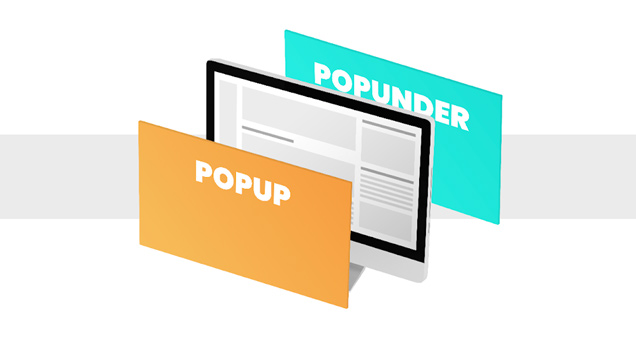
If you've been running digital advertising for a while, you've probably heard the term popunder thrown around in performance marketing circles. Maybe you've seen it listed as a format on ad networks and moved past it, assuming it was outdated or too technical to figure out. It's neither. Popunder traffic is one of the most accessible and cost-efficient formats available to advertisers today — and for the right offer, it can outperform formats that cost significantly more per impression.
This guide is for advertisers who haven't run a popunder campaign before. By the end, you'll understand exactly how the format works, how to buy your first campaign, what to set up before you launch, and how to scale once you have data.
What Is Popunder Traffic?
A popunder ad opens a new browser window or tab in the background when a user visits a publisher's page. Unlike a pop-up — which forces itself in front of whatever the user is doing — a popunder loads silently beneath the active window. The user doesn't see it while they're engaged with the original page. It surfaces when they close or minimize their current window, at a natural moment of transition.
This distinction matters more than it might seem. The delayed visibility means the user isn't interrupted mid-task. By the time they see your landing page, they've finished what they came to do. That's a meaningfully different attentional state than hitting someone with an overlay while they're actively reading.
Popunder advertising is purchased almost universally on a CPM basis — you pay per thousand impressions served. Because the format delivers high volumes at competitive CPM rates, it's particularly attractive for offers that convert from direct exposure without requiring a long pre-sale process.
What Offers Work Best with Popunder Ads?
Before you set up a campaign, the most important question is whether your offer is a good fit for the format. Popunder traffic performs consistently well in a defined set of verticals:
App installs and mobile offers. A user who closes a tab and finds your app install page already open is one tap from converting. Mobile popunders are particularly effective because the transition from browsing to the app store is frictionless.
Sweepstakes and lead generation. Simple, low-commitment offers — enter to win, claim a free sample, get a quote — convert well from cold popunder traffic because the ask is small enough that prior brand familiarity isn't required.
VOD and streaming subscriptions. Entertainment offers benefit from the full-page exposure that popunders provide. A well-designed streaming landing page with an attractive offer can convert a user who had no prior intent to subscribe.
Gaming. Browser games, mobile game installs, and online casino offers have historically been among the strongest performing categories in popunder advertising. The audience is already in an entertainment mindset.
Utilities and software. VPN services, system cleaners, browser extensions — utility software with a clear value proposition that's immediately apparent from the landing page converts reliably on popunder traffic.
If your offer requires significant education before a user would consider converting, popunder may not be the right primary format. But for offers where the landing page can do the selling on its own, it's one of the most efficient options available.
Step 1: Choose a Popunder Ad Network
Not all popunder ad networks are equal. The key things to evaluate before depositing your budget:
Traffic quality and fraud protection. Ask how the network filters invalid traffic. A network without active anti-fraud infrastructure will burn your budget on bot impressions that generate zero conversions. Look for multi-layer filtering and transparent reporting on traffic sources.
GEO coverage. Check whether the network has strong inventory in the geographies your offer targets. A network with deep Tier 1 coverage (US, UK, CA, AU) isn't necessarily the right choice if your offer is optimized for Tier 2 or Tier 3 markets.
Minimum deposit. For a first campaign, you want to test with enough budget to gather real data without over-committing. Networks that accept starting deposits of $100–$200 let you run a genuine test before scaling.
Real-time reporting. Popunder campaigns need fast feedback loops. If your reporting dashboard updates on a 24-hour delay, you'll burn significant budget before you can optimize. Real-time or near-real-time data is non-negotiable for performance campaigns.
Targeting capabilities. At minimum, you need geo, device type, and operating system targeting. More granular options — browser, language, connection type — give you more levers to optimize with once the campaign is running.
Step 2: Prepare Your Landing Page
In popunder campaigns, the landing page carries the entire conversion burden. There's no ad creative acting as a filter — every user who gets a popunder impression lands directly on your page. This means your landing page needs to work for cold traffic.
A few principles that apply specifically to popunder landing pages:
Load fast. If your page takes more than two to three seconds to load, a significant percentage of users will close it before they've seen anything. Page speed is a higher priority for popunder than almost any other format.
Make the value proposition instantly clear. Users arriving via popunder have no prior context. Within three seconds of the page loading, they should understand what you're offering and why it's worth their attention. Headlines do most of this work — make them specific and benefit-focused.
One clear action. Popunder landing pages shouldn't give users multiple things to click or consider. One offer, one CTA, one decision. Complexity kills conversion rates on cold traffic.
Mobile-first. A large share of popunder traffic comes from mobile devices. Test your landing page on mobile before you launch, not after you've spent budget.
Step 3: Set Up Your First Campaign
Once you've chosen a network and prepared your landing page, campaign setup is straightforward. The key decisions at launch:
Start with broad targeting, then narrow. For a first campaign, resist the urge to over-restrict your targeting before you have data. Launch with your target geographies and device types, but leave other parameters open. Let the data show you where your traffic is actually converting before you start cutting segments.
Set a frequency cap. Frequency capping limits how many times the same user sees your popunder within a given time window. Without it, a single user can receive multiple impressions in one session, which wastes budget and doesn't improve conversion rates. One impression per user per 24 hours is a reasonable starting point for most offers.
Use a conservative starting bid. Start at or slightly above the network's minimum recommended bid for your target geo. You don't need to win every impression — you need to win enough of the right impressions to generate meaningful data. Overbidding at launch inflates your testing costs without improving data quality.
Set a daily budget cap. Define how much you're willing to spend per day before you have optimization data. A daily cap prevents a misconfigured campaign from burning your entire deposit overnight.
Step 4: Analyze and Optimize
A popunder campaign isn't set-and-forget. The optimization work begins as soon as you have enough data to act on — typically after a few thousand impressions per segment.
Look at conversion rate by geo first. Even within a single country, conversion rates can vary significantly by region. If you're targeting the United States and 80% of your conversions are coming from three states, that's information worth acting on.
Break down by device and OS. Mobile vs desktop performance often differs dramatically. So does iOS vs Android for app install offers. Identify where your traffic is actually converting and shift budget toward those segments.
Test landing page variations. If volume allows, run two or three landing page variants simultaneously. Even small changes — headline wording, CTA button color, above-the-fold layout — can produce meaningful differences in conversion rate at popunder traffic volumes.
Cut non-performing placements. Most networks allow you to blacklist specific publisher placements that aren't converting. Use this. Some placements will consistently underperform regardless of your optimization — removing them improves your average CPM efficiency across the campaign.
Step 5: Scale What Works
Scaling a popunder campaign is more straightforward than most other formats because the bottleneck is usually budget rather than audience size. Once you've identified converting geo and device segments and optimized your landing page, scaling means increasing your daily budget and bidding more competitively on the segments that are delivering results.
The risk in scaling is losing the signal quality that made optimization possible. As you increase spend, monitor your conversion rate closely — a drop in CVR as you scale often indicates you're winning lower-quality impressions that weren't available at lower bid levels. If that happens, recalibrate your bid before continuing to push budget upward.
The campaigns that scale most successfully on popunder traffic share a common characteristic: a landing page that was built and tested specifically for cold traffic. If your page was originally designed for warm audiences coming from search or email, it will likely need adaptation before it performs at popunder volumes.
Final Thoughts
Popunder traffic has a lower creative barrier than almost any other format in digital advertising. You don't need a design team, a content strategy, or a complex campaign structure. You need a strong offer, a fast landing page, and the patience to gather and act on data before scaling.
For advertisers running app installs, lead generation, gaming, or entertainment offers, it's one of the most cost-efficient paths to volume available. The format rewards straightforward execution and penalizes over-complication. Start small, optimize honestly, and scale what the data tells you to scale.
GTaro is a global popunder ad network built for performance advertisers at every level. Whether you're running your first campaign or scaling an established offer, the platform offers real-time bidding, multi-layer traffic filtering, and granular targeting across 230+ GEOs — with a starting deposit low enough to test before you commit. Find out more at gtaroads.com.
About the author:
I have been working in marketing since 2008 and have successfully collaborated with many well-known companies in Ukraine and the CIS. I have taken projects from scratch and brought them to the TOP.
I have promoted major Internet platforms, such as ukr.net, rabota.ua, and have assisted the best web projects in their respective segments, such as Cosmopolitan, Meteoprog, FL.ru, and Rabota.ua.