
Top Contractor Insurance Choices for Smarter Business Protection
Top Contractor Insurance Choices for Smarter Business Protection
Posted on: June 25, 2026 | Written by: Madison Green

Most contractors don't realize how much the wrong policy can cost them until a claim gets denied. Contractor insurance choices aren't just about picking the cheapest monthly premium. There's a lot to figure out here: determining which coverages your state legally requires for your trade, finding premiums that don't gut your margins, and actually understanding what the policy excludes before a job goes sideways. After reviewing the leading options in this space, the differences between providers become pretty clear. This guide breaks down five strong choices worth knowing about.
How this ranking was put together
Every option in this list was researched using publicly available information pulled from official company websites, review platforms, and industry directories. Only providers with a demonstrated track record in contractor and construction insurance made the cut. Ratings, coverage details, and service features were all cross-referenced before any company was included.
→ See the full research breakdown
- Affordable Contractors Insurance - Best for contractor and construction business insurance
- Liberty Mutual - Best for personal and commercial insurance coverage
- biBerk - Best for small business commercial insurance
- Nationwide - Best for insurance and retirement options for individuals and organizations
- CNA - Best for commercial property and casualty insurance
Why Contractor Insurance Choices Are Worth a Closer Look
Getting this decision wrong doesn't just cost money. It can cost you a contract, a license, or your entire business if an uninsured claim lands at the wrong time.
Most contractors are dealing with the same challenge: figuring out what coverage is actually required versus what's optional for their trade and state. That distinction matters more than most people think, and most general insurance providers don't spell it out clearly.
Then there's the cost side of things. Finding affordable premiums without cutting coverage limits too thin is genuinely tricky, especially when you're pricing per $1M general liability coverage limit and comparing across multiple carriers.
The right contractor insurance choice affects everything from how fast you can get a certificate of insurance issued to how quickly a claim gets resolved. Those aren't small details. They directly shape whether your business keeps moving or hits a wall.
Comparing the 5 Best Contractor Insurance Choices
Note: All data in this table is sourced from review platforms and the official websites of the listed companies.
Company Name: Affordable Contractors Insurance
Years Operating: Est. 2011
Headquartered In: United States
Company Name: Liberty Mutual
Years Operating: Est. 1912
Headquartered In: Boston, Massachusetts
Company Name: biBerk
Years Operating: Est. 2015
Headquartered In: Stamford, United States
Company Name: Nationwide
Years Operating: Est. 1925
Headquartered In: Columbus, Ohio
Company Name: CNA
Years Operating: Est. 1853
Headquartered In: Chicago, Illinois
Affordable Contractors Insurance - Best for Contractor and Construction Business Insurance
What Services Does Affordable Contractors Insurance Offer?
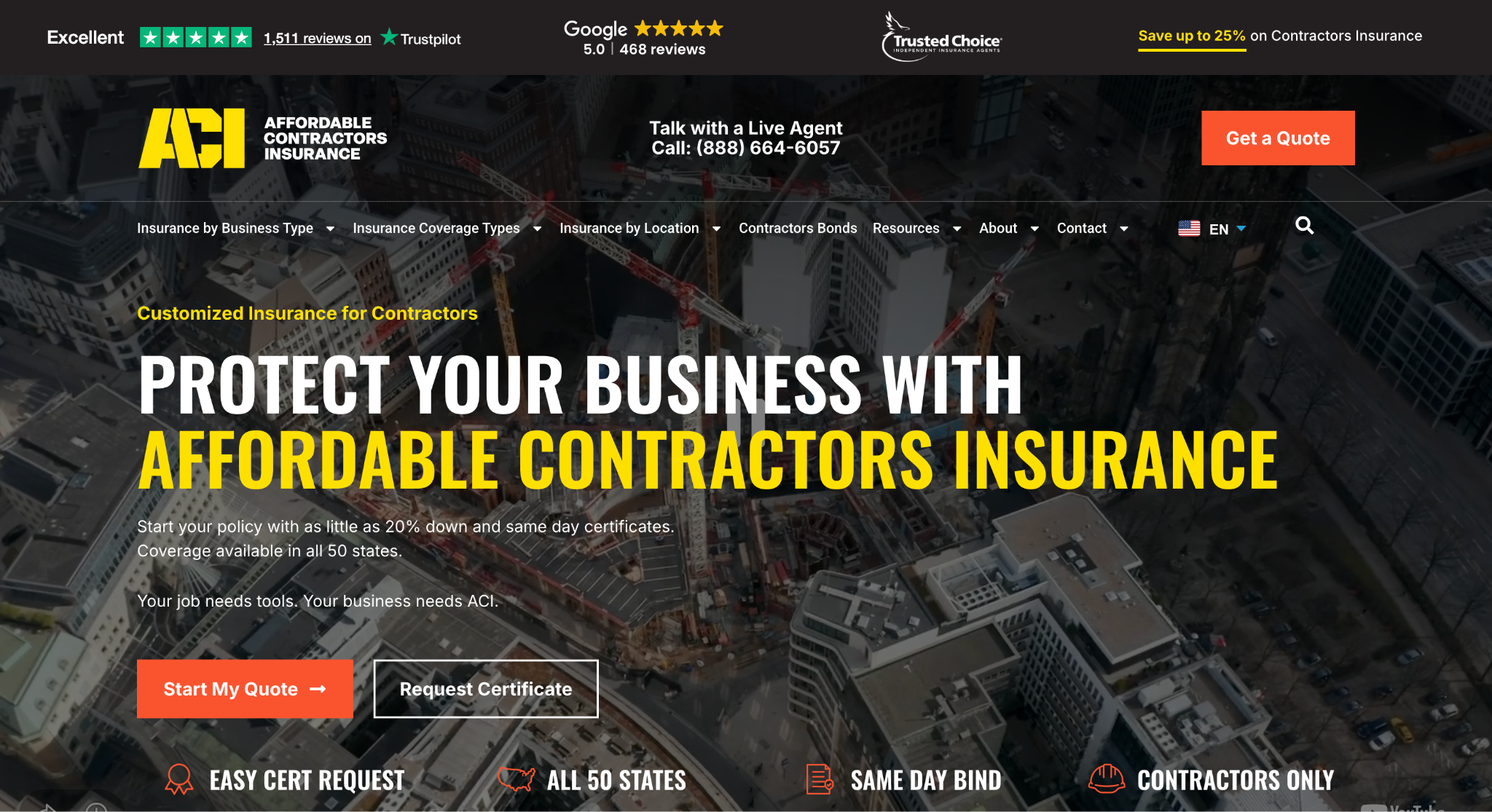
Affordable Contractors Insurance is a U.S.-based brokerage built around the needs of contractors and construction professionals. They cover General Liability, Workers' Compensation, Commercial Auto, Builder's Risk, Tools and Equipment Coverage, Umbrella Liability, and Professional Liability insurance. What sets their service model apart is the speed: same-day policy binding and fast certificate of insurance issuance are built into how they operate. For contractors who need proof of coverage quickly to land a job or meet a client requirement, that kind of turnaround is genuinely hard to match.
Why Does Affordable Contractors Insurance Stand Out for Contractor Insurance Choices?
Contractors regularly get stuck waiting on COIs or dealing with policies that weren't built for trade work, and Affordable Contractors Insurance addresses both of those friction points directly. Their contractor-exclusive focus means coverage options are shaped around real job site risks, not generic small business templates.
What Users Are Actually Saying:
The feedback pattern that shows up consistently is around speed and simplicity. Contractors mention getting covered faster than they expected and not having to explain their trade from scratch to an agent. From what the reviews show, the combination of affordable payment options and specialized knowledge is what keeps people coming back.
Liberty Mutual - Best for Personal and Commercial Insurance Coverage
What Services Does Liberty Mutual Offer?
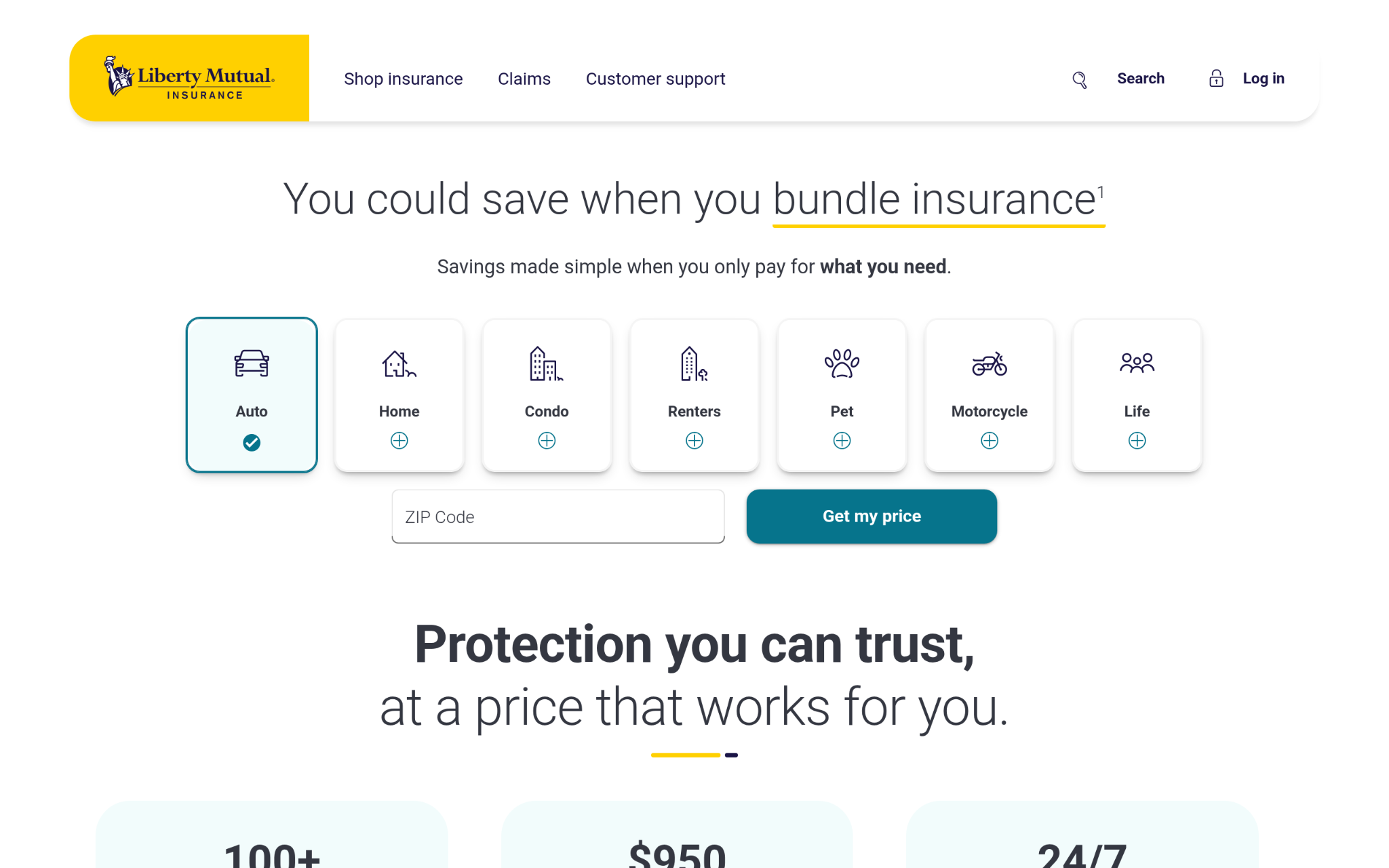
Liberty Mutual is one of the largest insurance carriers in the world, covering everything from personal auto and homeowners policies to workers' compensation and commercial lines. They operate through two business units: US Retail Markets and Global Risk Solutions, with over 45,000 employees across 900-plus locations worldwide. For contractors looking at commercial coverage from a Fortune 100 carrier (they rank 87th), Liberty Mutual brings serious financial backing and a wide product range. Their mobile app ratings sit at 4.8 stars on the Apple Store, which shows their consumer-facing tools are genuinely well-built.
Why Does Liberty Mutual Stand Out for Contractor Insurance Choices?
The challenge for contractors working with large carriers is often getting coverage that actually fits a trade business rather than a generic commercial operation. Liberty Mutual's depth of commercial products gives them more room to customize. From what the data shows, their financial strength and nationwide reach make them a reliable option when a contractor needs a carrier that can handle high-value projects without coverage gaps.
What Users Are Actually Saying:
Reviews highlight Liberty Mutual's app as a strong point, with users calling out easy claims access and policy management. The company's workplace awards and corporate citizenship recognition tend to translate into consistent, stable service experiences. That kind of stability is rare in an industry where carrier changes can disrupt policy continuity.
biBerk - Best for Small Business Commercial Insurance
What Services Does biBerk Offer?
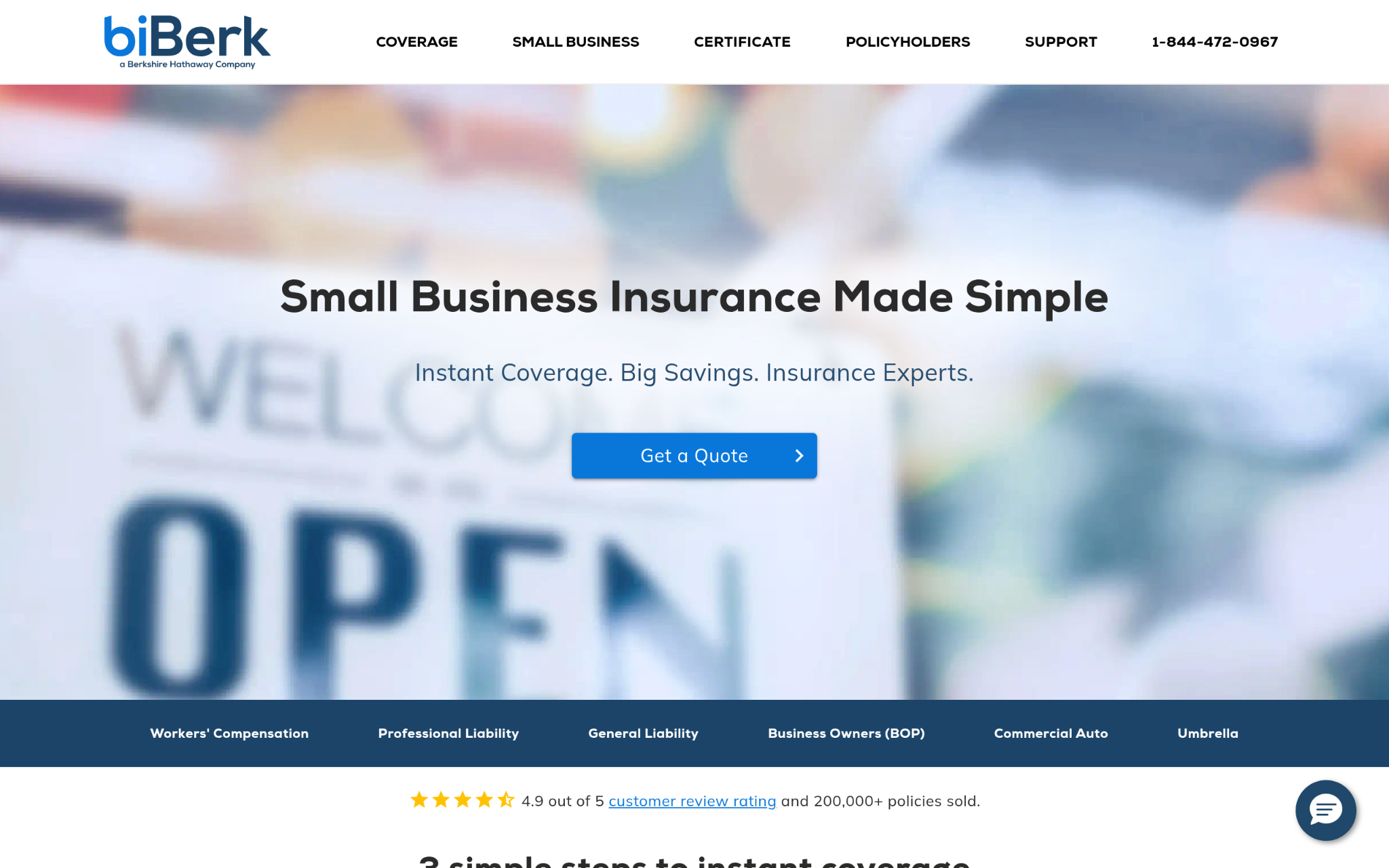
biBerk sits inside the Berkshire Hathaway Insurance Group, which gives it an A++ AM Best rating across its major subsidiaries (not cheap to earn, worth knowing). They offer workers' compensation, commercial auto, general liability, business property, professional liability, umbrella, and cyber insurance directly to small businesses without broker intermediaries. The direct-to-consumer model means savings of up to 20% compared to traditional broker-sourced policies. With over 200,000 customers served, they've clearly figured out how to make small business insurance feel less like a maze.
Why Does biBerk Stand Out for Contractor Insurance Choices?
Small contractors often pay broker fees they don't need to, and biBerk's direct model cuts that cost out entirely while keeping AM Best's highest financial stability rating intact. The ability to get coverage online in minutes means quote-to-policy conversion doesn't require multiple phone calls or weeks of back-and-forth.
What Users Are Actually Saying:
The consistent theme across biBerk reviews is simplicity and price. Customers mention being surprised at how fast the process moves, with several noting they got full coverage without ever speaking to an agent. From what the reviews show, the Berkshire Hathaway backing gives buyers confidence in the financial stability behind those fast-issued policies.
Nationwide - Best for Insurance and Retirement Solutions
What Services Does Nationwide Offer?
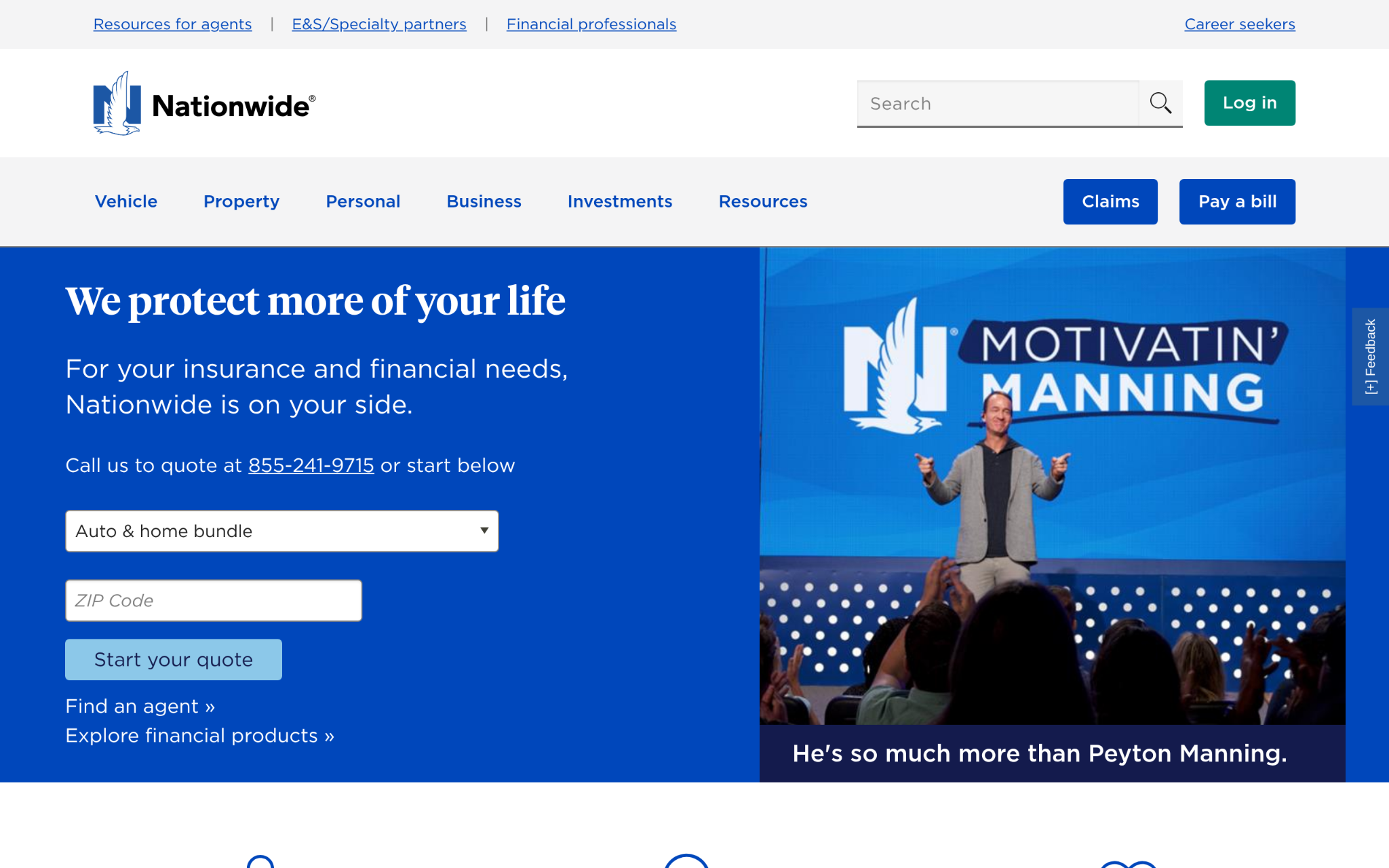
Nationwide has been running since 1925 and currently ranks No. 72 on the 2025 Fortune 500 list. They cover auto, business, homeowners, farm, life, pet, motorcycle, and boat insurance alongside retirement plans, annuities, and mutual funds. For contractors who also need personal coverage or retirement planning alongside their commercial policy, Nationwide offers a one-stop model that's hard to replicate. Their A+ Standard and Poor's rating reflects nearly a century of financial stability, and they administer close to 32,000 retirement plans protecting around $200 billion in participant assets (think enterprise-level scale).
Why Does Nationwide Stand Out for Contractor Insurance Choices?
Contractors who wear multiple hats, running their business while also planning for personal financial security, often struggle to find one carrier that handles both sides well. Nationwide's product breadth directly solves that. Their century-long track record means policy continuity and claims resolution timelines tend to be more predictable than those of newer entrants.
What Users Are Actually Saying:
Nationwide's retirement services have earned DALBAR's Customer Experience Excellence Award for six consecutive years, which says a lot about service consistency. Contractors who bundle business and personal coverage with Nationwide tend to mention the convenience factor as a major reason for staying. The awards and Fortune 500 ranking give them credibility that shows up in how they handle long-term policyholder relationships.
CNA - Best for Commercial Property and Casualty Insurance
What Services Does CNA Offer?
CNA Financial Corporation has been operating since 1853 through its founding companies, making it one of the oldest commercial insurers in the U.S. They cover property, marine, boiler and machinery, workers' compensation, general and product liability, commercial auto, and loss-sensitive insurance programs. Construction is one of their named focus segments alongside healthcare, manufacturing, and professional services, which signals real depth in contractor-adjacent risks. The company operates across the U.S., Canada, the UK, and Continental Europe, with about 6,600 employees focused on commercial lines.
Why Does CNA Stand Out for Contractor Insurance Choices?
Contractors running larger operations or higher-value projects need a commercial insurer with the capacity to back major claims. CNA's position as the seventh-largest commercial insurer in the U.S. gives them that depth. Their named focus on construction as a customer segment means coverage options aren't just adapted from generic commercial templates.
What Users Are Actually Saying:
CNA's reputation in commercial circles centers on its ability to handle specialized and high-profile coverage needs. Their backing of events like the Indianapolis 500 and entities like the World Boxing Association reflects serious commercial underwriting capability. From what the research shows, contractors working on complex or large-scale projects tend to respond well to CNA's structured, experience-backed approach to claims and coverage.
Methodology Behind These Picks
Gathering and Organizing Your Data Sources
The research started by pulling together a broad list of insurance providers across multiple source types. Company directories, industry review platforms, trade association mentions, and official carrier websites all fed into the initial pool. Rather than limiting the search to familiar names, the goal was to surface any provider with a meaningful presence in contractor and construction insurance, whether they were a national carrier, a specialty brokerage, or a direct-to-consumer platform. Coverage type details, service descriptions, and market positioning statements were all collected and organized before any evaluation began.
The Shortlist Cut
From that initial pool, providers without verifiable track records in contractor insurance were removed early. Review patterns were examined across multiple platforms, looking for consistency in the feedback rather than isolated high or low scores. Providers where review volume was too thin to establish a reliable signal, or where coverage details couldn't be confirmed through official sources, didn't advance. The shortlist was tightened to companies where both the service claims and the reviews pointed in the same direction.
Fact-Checking the Picks
Each shortlisted company's claims were cross-referenced against available external data. Service page descriptions were checked against what actual policyholders reported in reviews. Where a company claimed fast COI issuance or same-day binding, reviewer comments were scanned for confirmation or contradiction. Financial stability ratings from AM Best and similar agencies were checked directly against carrier profiles. Any gap between what a company stated and what real-world feedback reflected was flagged during this stage.
Authority Signals and Industry Standing
Beyond coverage features, each provider's broader standing in the market was assessed. Industry awards, mentions in trade publications, rankings on recognized financial lists like the Fortune 500, and AM Best financial strength ratings all contributed here. Long operating histories were treated as a meaningful signal, particularly for commercial carriers where claim-paying ability over time matters more than marketing claims. Companies with consistent recognition across multiple years carried more weight than those with single-year mentions.
Contractor Insurance Choices Track Record
The final evaluation looked at how well each provider addressed contractor-relevant needs. This meant checking for dedicated service pages covering contractor policies, verified reviews from trade professionals, and any published case studies or examples showing real contractor outcomes. Providers who demonstrated a clear understanding of trade-specific risks, such as general liability limits tied to project value, tools and equipment coverage, and builder's risk policies, scored higher than those treating contractor coverage as a side category.
Picking the Right Contractor Insurance Choices for You
Choosing the right contractor insurance provider comes down to more than just price. The best fit depends on your trade, your state's requirements, the size of your jobs, and how quickly you need coverage to be active. Here's what to actually weigh before you decide.
- Industry and Domain Experience: Look for providers who cover contractor and construction risks, not just general small business insurance. Trade-specific coverage means fewer gaps.
- Features and Service Options: Check whether the provider can bundle General Liability, Workers' Compensation, Commercial Auto, and Builder's Risk. Bundled coverage often cuts costs versus standalone policies.
- Pricing Structure: Compare the cost per $1M general liability coverage limit across carriers. Some direct-to-consumer providers save 15-20% by cutting broker fees, which adds up fast.
- Results Measurement: Ask about average claims settlement time and COI issuance speed. A policy that takes two weeks to produce a certificate can cost you a contract.
- Industry Knowledge and Compliance: Confirm the provider understands your state's contractor licensing laws and which coverages are legally required for your trade. That knowledge gap is where most coverage problems start.
The Verdict
Contractor insurance isn't one-size-fits-all, and the five providers covered here reflect that range. Affordable Contractors Insurance fits contractors who need fast, trade-specific coverage with same-day binding. biBerk suits smaller operations, watching margins closely. Liberty Mutual, Nationwide, and CNA serve contractors with larger or more complex coverage needs. The right call depends on your trade, project size, and how quickly your business is growing. As contractor regulations and job requirements keep changing, having the right coverage partner matters more than ever.
About the author:
Loopex became their first child, raised with patience, commitment, and the occasional sleepless night. (A second child eventually joined the family too, though this one was human.)